



“Beef, it’s what’s for dinner.” For those of you who are unfamiliar, it’s a phrase that became iconic after the launch of a 1992 ad campaign to combat declining beef consumption. However, over the past decade, beef consumption has risen despite higher prices, driven by increased demand and low cattle inventory. Yet, despite the elevated costs, consumers prioritize incorporating red meat into their diets. Social media has been a major contributor to this, as fitness culture gains greater visibility, showcasing how protein intake is excellent for muscle growth, satiety, and energy. Beef has a lot of bang for its buck (despite the high price tag), with a cooked three-ounce serving providing approximately 25 grams of protein. All this said, preparing beef is a different matter entirely. How in the world do you go about cooking a steak when you’ve just dropped a pretty penny buying it? It can feel much easier to ruin a good cut of steak than to cook it properly. But after you’ve finished this article, you’ll feel like a steak expert.
Cuts of steak
Steak types are varied in their own right, and it’s important to have some basic knowledge of how to differentiate them. There are premium cuts, such as ribeye, New York strip, T-bone, porterhouse, and filet mignon (aka Beef Tenderloin). Naturally tender, these are considered excellent steaks for searing and, as a result, require minimal work yet yield elegant dishes. All of these cuts have considerable fat marbling, leading to their classic beefy flavor. Keep in mind that a filet has less marbling, but it is still considered a premium cut because it is so tender. Filet mignon is part of the cow’s tenderloin, which works less as a muscle, resulting in softer muscle fibers and a buttery steak texture. After a necessary rest, these cuts should be sliced ¾ of an inch thick against the meat’s natural grain to help preserve their juiciness.
Steak cuts with a fibrous texture include skirt steak, hanger steak, bavette (aka sirloin flap), and flank steak. These cuts benefit from marinades, and without exception, cut them thin, on the bias, and always against the grain to unlock maximum tenderness.

Less traditional cuts of steak, but important to mention nonetheless, are those that benefit from slow-cooking techniques such as braising. These are collagen-rich cuts such as chuck steak, short ribs, blade steak, and beef shank. They all need time to cook low and slow — no 30-minute meals here. When you do, they become fork-tender as the collagen has had sufficient time to break down and melt away.
Once considered ‘everyday cuts,’ top sirloin, bottom sirloin, flat iron steak, and Denver steak are very lean due to low amounts of fat marbling and can easily be overcooked, resulting in a tough steak that resembles shoe leather. Cook these cuts with precise timing, then after a 10-minute rest, cut the slices approximately ½ inch thick without an angle. This will keep the meat tender and juicy.
Your biggest takeaways when it comes to understanding different cuts of meat should be that fat equals flavor, tender cuts benefit from thick slices, and lean cuts benefit from thin cuts. All this to say, a less expensive yet well-prepared flank steak can always outperform a more expensive but poorly cooked fillet. Technique matters.
How to begin
When cooking any steak, it is important to bring it to room temperature, which helps the steak cook evenly and can take anywhere from 30 to 60 minutes. This rule applies to all steaks, regardless of the seasoning method, such as salting, marinating, or a dry rub. Once removed from all packaging, salt the steak with Kosher salt, which has larger crystals than regular table salt and therefore is less likely to over-salt your steak. Remember, steaks can take more salt than you think, so don’t be afraid to be generous with it. Salt from several inches above the steak and cascade the crystals over the meat to ensure even seasoning. Remember that salt draws out moisture, so pat your steak dry if you plan to pan-sear it.

How to cook a New York strip steak
Because different cuts require different cooking methods, for all intents and purposes, let’s focus on pan-searing a New York Strip steak. Practice makes perfect, but this cut of meat is forgiving, and pan searing is one of the easiest cooking methods to learn. There are three key steps: make sure your pan is smoking hot, make sure your steak is very dry, and do not touch your steak after it is placed in the pan for at least two minutes, no matter how tempted you are.
Let’s zoom out a bit more from this list. First, consider your pan. Use a cast-iron pan if possible. They distribute heat evenly and ensure an even cook on your steak. They can also get extremely hot, allowing a nice golden crust to form, known as the Maillard reaction. If you don’t have a cast-iron pan, use a stainless steel pan, and as a last resort, use a non-stick pan. They just don’t hold heat as well, and the non-stick coating usually inhibits the formation of the best possible crust. Heat your pan to just smoking; the pan should be aggressively hot, not medium-high, polite hot. Next, add one to two tablespoons of high smoke-point oil such as grapeseed, canola, or avocado. Save your olive oil for another use — it will only burn! Add no more than two steaks to the pan at a time; any more will crowd a 10 to 12-inch pan and will steam your steaks instead of searing them. If necessary, cook your steaks in batches. You can always keep them warm in a 200°F oven.

As mentioned before, it is essential that your steak is very dry before it enters the pan, so pat it dry with a paper towel. If you pat it dry instead of wiping it dry, you will preserve the seasoning placed on earlier. When your pan is ready, lay the steak away from you, press it down lightly to ensure full contact, then let it sear for two to three minutes without moving it. You will know the steak is ready when the crust releases naturally. Flip the steak and sear it for two to five minutes. How you like your steak will determine your final cooking time. A thermometer reads a rare steak at 120–125°F, medium-rare, which many consider the ideal temperature, at 130–135°F, and medium at 140–145°F. Use an instant-read thermometer, which will become your best culinary friend when cooking proteins. However you prefer your steak cooked, remove it 5°F early because you will have carryover cooking from the high heat of your pan.
Some would argue that the next part is the hardest: resting the steak for 10 minutes instead of cutting into it immediately. Regardless, it’s non-negotiable. Resting is a necessary evil because it keeps the juices you worked so hard to preserve inside the steak rather than letting them flood your cutting board. So, as a distraction, make a pan sauce.
How to make a pan sauce
The steps of making a pan sauce are always the same. Pour out the fat from the pan you cooked your steak in, reserving about a tablespoon. Then add a minced allium (shallot, onion, scallion) and cook until wilted but not browned. Next, add ¼- ½ cup of your choice of alcohol (wine, sherry, sake, etc.), deglaze and scrape up the brown bits in the pan (this is delicious flavor!), then reduce until it is slightly syrupy and ¾ of the way evaporated. Add ½-¾ cup of stock, adding ¼ cup more stock than the initial amount of wine, and reduce by half. The last step is to turn off the heat and whisk in cold (emphasis on cold) unsalted butter or truffle butter. This technique is called monte au beurre, and it thickens the sauce by emulsifying the cold butter into the hot reduced liquid. Voila! Now you have a beautiful pan sauce for your steak. An easy way to remember the steps of a pan sauce is to remove fat + allium + deglaze + reduce + stock + reduce + mount with butter.

Now that your steak is rested, slice the New York strip in thick slices, about ¾ inch thick, to preserve the juice. This cut of steak is already tender; your job is to protect the meat’s structure, not break it down. Spoon your pan sauce on the bottom of a plate and place the sliced steak on top. You worked hard for that delicious crust, so don’t make it soggy with a sauce.
And there you have it…all you need to know about pan-searing a steak and making a pan sauce, with an added bonus of why eating steak is a popular choice lately, and how doing so benefits your body. All of this information is cause for a celebration! How about a steak dinner?
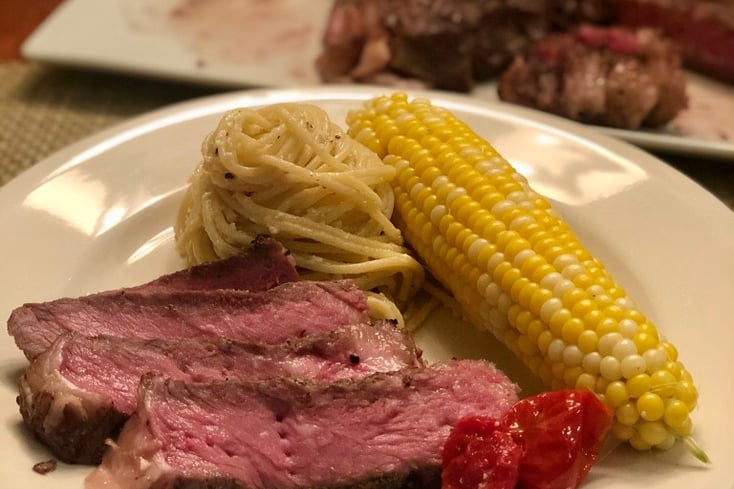

New York Strip Steaks & Red Wine Pan Sauce
Instructions
- Heat an oven to 350F° and take the steak out of the refrigerator and bring it to room temperature.
- Season the steak on both sides with salt. Pepper can burn, so add it when the steak is resting.
- Heat a cast iron or a sauté pan until just smoking. Add the canola oil, and when ripples form, add the steak, placing it in the pan away from you.
- Sear the steak for 2 to 3 minutes, then flip it and cook for another 2 to 5 minutes. With an instant read thermometer, cook to the desired temperature, see note. If a crust forms on both sides and your steak still needs additional cooking time, place it in the oven for up to 8 minutes, flipping halfway through.
- Remove the steak from the oven and place it on a rack or a cutting board to rest for 10-15 minutes. You can tent the steak with foil to keep it warm.
- Pour off all but one tablespoon of the fat from the pan and add the shallot. Sauté for 30 seconds or until wilted, but not brown. Deglaze with the red wine and reduce the liquid by ¾. Add stock and reduce by ¾.
- Turn off and remove the pan from the heat, and whisk in the cold butter until it is fully incorporated. The sauce should be shiny and slightly thickened.
Notes
- An instant read thermometer reads a rare steak at 120–125°F, medium-rare at 130–135°F, and medium at 140–145°F.